I came home from a long day of teaching in mid-January of this past year, tired in that uniquely teacherly way where your voice feels a half-step lower and your…
When you teach writing to ten-year-olds, you start to see writing less as an artform and more as experimentation. Each and every sentence is its own small hypothesis: If I…
I was reading How to Read and Why by Harold Bloom, and in this book he states that literary critics practice their art in order to make what is implicit…
I track every book I read. Religiously. Compulsively. Joyfully. I use Goodreads to log titles and dates. I keep an Excel spreadsheet that catalogs my entire personal library, sortable by…
I tell my students that every book talks to you before you open it. Sometimes it whispers. Sometimes it shouts. Sometimes it beckons mysteriously from across the bookstore with a…
Every so often, someone asks me how I find time to read. The tone varies. Sometimes it's admiring. Sometimes it's accusatory. Often it's said with a kind of mild despair,…
I teach fifth grade science and literature. Which means, on any given day, I might go from explaining the phases of the moon to asking a room full of ten-year-olds…
The first thing to understand is that the ideas are not yours. Not really. You’re not a well or a spring or even a clever little idea-machine. You’re more like…
I hold a certain sort of reverence for nonfiction books that can manage to be engaging in the same way fiction can be … books that can strike that balance…
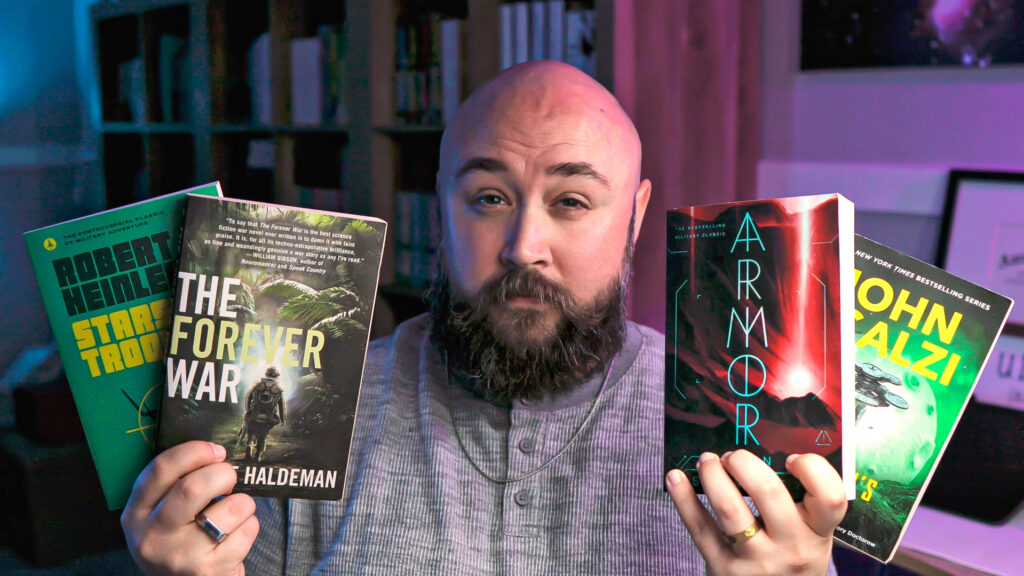
There is no shortage of war stories in science fiction. Real-world conflicts are allegorized and translated into grandiose space operas where human bodies are broken or rebuilt or reshaped or…